What Contractors Are Actually Buying, Financing, and Replacing in 2026
Every year, contractors make big equipment decisions. Here’s what the data says they’re doing right now.
Equipment World’s 2026 Tech & Spec Survey just dropped, and it’s packed with real numbers from real contractors — 97 of them, mostly owners and managers — about what they’re buying, how they’re paying for it, which brands they trust, and when they pull the plug on a machine.
If you’re in the market for equipment this year, this data is worth paying attention to. It tells you what your peers are doing — and where the smart opportunities are.
83% of Contractors Are Buying Equipment in 2026
Let’s start with the headline: 83% of respondents plan to buy at least one piece of construction equipment this year.
That’s not a marginal majority — that’s nearly everyone. And the most common plan is practical: the largest category was 38% planning to buy one to two machines. Not a fleet overhaul, just steady, intentional fleet management.
The message is clear: contractors who are growing — or just keeping their operations sharp — are moving in 2026. The question is whether you’re going to be one of them.
Most Contractors Are Financing — Not Paying Cash
Here’s something worth knowing if you’re still writing checks for equipment.
Taking out a loan is the top form of purchase, with 42% listing financing as their number one purchase option. Cash was close behind at 37%. Lease to purchase and rent to purchase came in at a combined 17%.
Think about that. Even in a survey of experienced contractors — people who’ve been around long enough to have the cash — the majority are still choosing to finance. That’s not because they can’t afford to pay outright. It’s because they’ve figured out that keeping cash in the business is smarter than parking it in a machine.
When you finance equipment, your cash stays liquid. You can cover payroll, take on a bigger job, handle unexpected repairs, or jump on an opportunity that pops up. The equipment earns its keep while you pay it off — and that’s just good business.
The Brands Contractors Trust Most
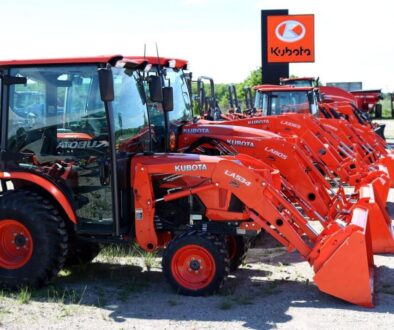
Of the more than 25 equipment brands contractors were asked to choose from, these were the top five: Caterpillar at 60%, John Deere at 45%, Bobcat at 41%, Kubota at 35%, and Case Construction Equipment at 34%.
Cat at the top is no surprise — they’ve built that reputation over decades. But the strength of Bobcat and Kubota in the compact space is the real story here. Compact equipment has become the backbone of modern job sites, and those two brands are dominating that category for a reason: they’re reliable, versatile, and hold their value well when it’s time to trade or sell.
At Heavy Iron Capital, we see this play out in financing every day. The machines on that list are consistently the easiest to finance and the ones with the strongest resale value on the back end.
When to Replace Your Equipment — By the Numbers
One of the most useful parts of this survey is the breakdown of replacement hours by machine type. These aren’t random rules of thumb — they’re what contractors in the field are actually doing:
- Skid steers & compact track loaders: 2,000–6,000 hours
- Excavators: 8,000–10,000 hours
- Dozers: 8,000–10,000 hours
- Backhoes: 8,000–10,000 hours
- Wheel loaders: 10,000–12,000 hours
- Articulated dump trucks: 12,000–14,000 hours
Why does this matter? Because running a machine past its sweet spot costs you more than replacing it. You’re not saving money by holding on to aging iron — you’re paying for it in repairs, downtime, and lost productivity. Knowing where your machine sits on this scale is one of the best ways to make a proactive decision instead of a reactive one.
Also worth noting: 83% of respondents perform at least small repairs and preventive maintenance in-house. If you’re not doing this, you’re leaving money on the table — both in repair costs and in the life you’re getting out of your machines.
How Contractors Are Getting Rid of Old Equipment
When it’s time to move on, contractors have three main exit ramps: the largest percentage prefer to sell to another contractor at 29% or at auction at 19%, while 39% prefer to trade in at their dealers.
Each method has its tradeoffs. Trading in is the most convenient — you hand over the keys and walk away with the credit applied to your next machine. Private sales to other contractors often get you more money but take more time and effort. Auctions can go either way depending on the market.
The right answer depends on your timeline and how much equity you want to extract. If you’re financing your next machine, trade-in value can significantly reduce what you need to borrow — and that’s worth factoring into your decision early, not at the last minute.
Technology: The Gap Most Contractors Haven’t Closed Yet
Here’s where the survey gets interesting — and honestly, a little surprising.
Despite growing popularity, nearly 65% of respondents do not use 2D or 3D machine control. Those using 3D control came in at 24.7%, and those using 2D at 10.3%.
Fleet management software tells a similar story. Only 39% use either a cloud-based or computer-based system, while 40% use a manual system, 39% use spreadsheets or Excel, and 9% use no system at all.
The contractors who have adopted machine control point to some real benefits: better efficiency, greater precision, and reduced labor costs. The ones who haven’t cite cost and the learning curve as the main holdbacks.
Here’s the opportunity hiding in this data: if most of your competitors are still running manual systems and skipping machine control, getting ahead of that curve right now is a real advantage. The next time you’re buying a machine, it’s worth asking what tech comes with it — and whether financing the upgrade alongside the equipment makes more sense than trying to bolt it on later.
What This All Adds Up To
The contractors winning in 2026 aren’t necessarily the ones with the biggest fleets or the deepest pockets. They’re the ones making smart, well-timed decisions — knowing when to replace a machine, how to structure a purchase, and how to keep cash working in the business instead of sitting in aging iron.
If you’re planning a purchase this year, the smartest first move is getting pre-approved so you know exactly what you’re working with before you start shopping.
Heavy Iron Capital specializes in equipment financing for contractors like you — fast approvals, flexible terms, no hard credit pull to get started. Get pre-approved today.